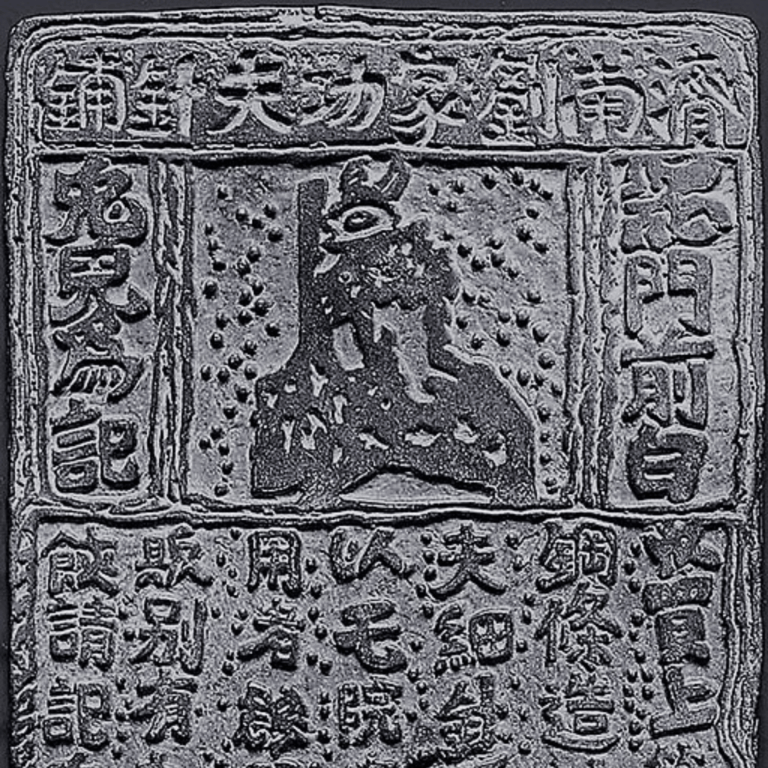

A book about labels published in 1956 received fresh attention in 2009. Paula A. McLean revisited Stanley C. Hollander’s History of Labels in the inaugural issue of the Journal of Historical Research in Marketing. This modest act of recovery illustrates an important historical ambition: apparently minor objects and neglected publications can illuminate both commercial activity and the ways people have understood it (McLean, 2009).
For a history of marketing, this is an instructive starting point. A label connects a physical product with information and recognition. An older study of labels offers another kind of evidence: it reveals what an earlier researcher considered worth investigating. The object and the interpretation belong to different historical moments. Bringing them into conversation can make familiar commercial arrangements less obvious and reveal questions that a chronological parade of celebrated campaigns would miss.
The significance of the journal’s launch therefore requires more than a founding date. Historical marketing research already had publications, methods and scholarly communities. What appeared in 2009 was a specialist setting in which this work could be pursued on a continuing basis. Its intellectual promise was to test inherited accounts, recover overlooked evidence and make disagreements about the past productive. Understanding that promise also means examining the journal’s predecessors and the limits of institutional success.
Historical research before a dedicated journal
In 1980 Ronald Savitt published ‘Historical Research in Marketing’ in the Journal of Marketing. His article presented a methodological case for connecting historical principles with marketing questions and understanding the present through investigation of the past (Savitt, 1980). Its publication establishes a useful point of orientation: an established general marketing journal was discussing historical inquiry almost three decades before the JHRM’s first issue.
This was not necessarily the first step in a predetermined progression towards a specialist title. Different publication settings perform different tasks. A methodological argument in a general journal can reach researchers who do not regard themselves as historians. A conference allows an unfinished investigation to encounter informed questions. A specialist journal can support sustained discussion without requiring every contribution to justify the existence of its subject from the beginning. These roles can reinforce one another without becoming interchangeable.
An important meeting place emerged in 1983 at Michigan State University. Stanley C. Hollander organized what was originally called the North American Workshop on Historical Research in Marketing, the predecessor of the CHARM conferences. The association’s history subsequently describes an international reach involving venues in North America and Europe (CHARM Association, n.d.a). The development of marketing history thus depended on people finding colleagues, sharing materials and recognizing common methodological problems.
Such meetings matter for reasons that do not appear in a simple publication count. A researcher interpreting a merchant’s correspondence faces different difficulties from someone preparing a contemporary survey. The survival of an archive may be uneven. A document may have an uncertain date or an unidentified intended reader. Colleagues who understand these difficulties can help turn an intriguing discovery into a defensible research question. A scholarly community gives unusual material an audience capable of challenging its interpretation.
There were also earlier specialist publishing experiments. In his founding editorial, Jones identified the Journal of Advertising History, published from 1977 to 1988, and its revival as the Journal of Marketing History in 2002, which produced only one issue (Jones, 2009). Calling the JHRM the first journal ever concerned with marketing history would erase these antecedents. A more useful comparison concerns continuity, scope and the institutional arrangements needed to sustain publication.
That distinction matters beyond bibliographical accuracy. Successful later ventures can make earlier attempts disappear from retrospective accounts. A history concerned with innovation should ask what enabled a project to continue, rather than assuming that a good idea naturally produced a lasting institution. Contributions, editorial labour, informed criticism and returning readers all have to be assembled. Earlier journals belong within that explanation even when their publication runs were short. Their disappearance does not mean the questions they raised were unimportant.
Separating the proposal from publication
The contemporary editorial supplies a concise founding sequence. At CHARM in Durham on 20 May 2007, the decision was taken to develop a journal proposal; Emerald accepted it by the end of that summer. D. G. Brian Jones became founding editor. He announced two issues for 2009 and quarterly publication for 2010 (Jones, 2009). Emerald dates the inaugural issue to 20 March 2009 (Emerald Publishing, 2009).
These events describe different kinds of beginning. The scholarly initiative, the publisher’s commitment and the appearance of a finished issue did not happen simultaneously. For a historical timeline, 2007 identifies organized preparation, whereas 2009 identifies the start of publication. The distinction also prevents a later publishing frequency from being projected backwards onto the opening year. Small chronological qualifications are essential when a milestone is supposed to explain what actually changed at a particular moment.
The CHARM Association explicitly includes sponsorship of the JHRM’s founding among its activities (CHARM Association, n.d.b). The journal consequently grew out of an existing research community. It was not simply a publisher attaching an attractive title to an otherwise unorganized topic. Yet a connection with a scholarly association should not be mistaken for a claim that one conference owns a field. Specialization becomes valuable when it creates opportunities for new questions and contradictory findings to appear.
Institutionally, this brought together two kinds of continuity. Conferences depend on particular encounters and changing programmes. Journals require repeated decisions about which contributions should appear and how they relate to one another. Those decisions have intellectual consequences. They help determine whether small retailers, packaging, teaching materials or the careers of scholars become visible as legitimate historical subjects. Editorial organization can therefore change the reach of a field without itself constituting a new explanatory theory.
The journal’s own development should remain open to historical investigation. A community that studies the construction of marketing categories cannot treat its publishing categories as natural or permanent. Sections, special themes and frequently cited predecessors direct attention. They may provide useful orientation while also creating new omissions. Institutional endurance is a condition that allows research to continue; it cannot by itself establish that the resulting picture of the past is complete.
Two histories that need each other
A useful distinction separates the history of marketing practice from the history of marketing thought. The former investigates activities and arrangements through which exchange occurs. The latter examines concepts, explanations and the people and institutions that produced them. They overlap, but neither can stand in automatically for the other. A merchant might differentiate between customers without using a later textbook term. A textbook might recommend an approach that businesses did not adopt.
This distinction becomes especially important when dating an innovation. The earliest surviving use of a name, the earliest documented example of a practice and the point at which that practice became widespread are different historical events. Evidence may permit a precise date for one and only an approximate interval for another. That is less convenient than giving everything a birthday, but it is more informative. A specialist journal can accommodate those differences rather than compress every investigation into a story about invention.
Ayhan Akpınar, Canberk Çetin and Muhammet Ali Tiltay later examined the JHRM bibliometrically. Within their study period of 2009–2021, they classified 163 papers as marketing practice history and 158 as marketing thought history (Akpınar, Çetin and Tiltay, 2021). This near balance describes the journal material they investigated. It does not measure all historical marketing scholarship worldwide or establish a current distribution extending beyond 2021.
The figures make a structure visible without settling its interpretation. Within each category, which regions, occupations and types of evidence received attention? Which languages were represented? What archives were inaccessible? A numerical balance between large categories can coexist with a very uneven distribution of attention inside them. Bibliometric description is therefore a starting point for historical questions rather than an automatic assessment of intellectual quality. Counting contributions and reading their arguments closely serve related but different purposes.
There is also a problem of recognition. A paper may contribute to marketing history without using the field’s preferred vocabulary or appearing in its specialist journals. Conversely, a historical reference in a marketing article does not necessarily amount to historical investigation. Boundaries have to be explained rather than silently assumed. The value of identifying a field lies in making relevant work easier to find and discuss, while remaining alert to important research conducted elsewhere.
A neighbourhood store changes the scale
In the inaugural issue, Terrence H. Witkowski examined Chicago’s General Book Store between 1938 and 1947. His abstract identifies business records, family photographs, surviving objects, oral interviews and contemporary retailing literature as evidence. The case connects a Polish-Jewish immigrant neighbourhood with wider developments during the Depression and the Second World War (Witkowski, 2009).
A study at this scale challenges the assumption that marketing history should begin with a celebrated corporation. One shop can open questions about commercial decisions under limited resources and about relationships between a business, its neighbourhood and a household economy. Its small size is not inherently a methodological weakness. It makes some questions easier to investigate than they would be in a national sales series. What matters is whether the claims made are appropriate to the evidence and the case.
The different source types also demonstrate why historical research involves more than collecting attractive images. A photograph records a selected view at a particular moment. A financial document can establish a transaction without explaining what customers thought about it. A later interview can recover experience while incorporating subsequent interpretation. These materials can support one another, but they need not agree. Disagreement may reveal the most interesting problem rather than an inconvenience to be edited out.
Consider a hypothetical illustration: a shop photograph shows an elaborate window display, while surviving accounts record disappointing receipts. Neither fact establishes the display’s effect. The researcher would need to investigate timing, merchandise and possible comparisons. This is a methodological example, not an additional reported finding from Witkowski’s article. Its purpose is to separate an observed trace from a plausible explanation. Historical interpretation becomes stronger when readers can see the steps between the two.
Small cases also require care about representativeness. A well-documented shop may be unusual precisely because its records survived. Its experience can identify mechanisms or generate questions without establishing how common they were. Comparison with other businesses would require further research. Recognizing that limitation does not diminish the case. It clarifies the contribution and prevents an individual experience from quietly becoming a description of an entire population.
Relationships before relationship marketing
Another inaugural contribution challenged a different kind of familiar narrative. Mark Tadajewski examined Arthur Jerome Eddy’s The New Competition as an antecedent to relationship marketing. The abstract identifies earlier arguments about relationships between firms, disputes an origin confined to the 1970s and notes that close organizational relationships do not necessarily make markets more efficient (Tadajewski, 2009).
This opens two historical questions. How novel is an idea presented as new? And what value judgement is carried by its name? Contemporary marketing language often makes relationships sound cooperative and beneficial. A historical investigation needs to ask who benefited from a particular arrangement and who was excluded. An older origin does not establish that a practice was desirable, just as it does not invalidate every later refinement of the idea.
It would also be misleading to rename every earlier commercial connection as fully developed relationship marketing. Similarities between a modern theory and a past practice can exist alongside substantial differences in purpose, language and institutional setting. A useful comparison preserves those differences. Otherwise, history merely replaces the legend of sudden invention with an equally unhelpful assertion that everything has always existed. Neither account explains what changed or why it mattered.
An investigation might establish resemblance, a shared term or a documented line of influence. Those are different claims. Similar practices can arise independently when people encounter comparable problems. Demonstrating influence requires evidence of transmission rather than a retrospective likeness alone. Historical research can therefore be valuable without locating one definitive inventor. It may instead explain how different circumstances produced related solutions and why those solutions had different consequences.
This is especially relevant to marketing’s recurring vocabulary of transformation. A researcher should distinguish a new name from a new mechanism, and wider availability from first appearance. These distinctions do not make innovation disappear. They make its description more precise. The question becomes what combination of capabilities, organizational choices and circumstances enabled a change, rather than whether a convenient slogan can be assigned a single point of origin.
Recovery, teaching and different kinds of contribution
Stanley J. Shapiro’s opening account of Explorations & Insights described a section extending beyond conventional book reviews. It would revisit neglected ideas and address the teaching of marketing history. He also explicitly envisaged invited contributions rather than a section uniformly subject to double-blind review (Shapiro, 2009). The inaugural issue was dedicated to Hollander, connecting recollections of his work with an agenda for further historical discussion. This distinction between types of contribution matters because a scholarly journal contains different kinds of writing, with different purposes and procedures.
A research paper, a recollection and a review can each contribute something important, but they cannot be read in exactly the same way. A personal account provides evidence of how a participant remembers and interprets a career. That does not independently confirm every event it describes. Readers need to identify the kind of text before using its claims. Clearly distinguishing genres makes a diverse issue more useful rather than less scholarly.
The inaugural issue also included Jones and William Keep’s account of Hollander’s doctoral seminar in the history of marketing thought. According to its abstract, the study combined personal reflections, interviews and documentation of the final course offering (Jones and Keep, 2009). This brings teaching into the historical picture. A field reproduces itself through reading choices, discussion and ways of asking questions, as well as through published results.
One implication for teaching is straightforward. Students might compare a contemporary advertisement, a later corporate account and a scholarly interpretation of the same episode. The task would be to identify different intentions and evidential limits, rather than memorize additional dates. Who produced each text, for which audience and with what information available? What is absent? Such an exercise connects marketing knowledge with the broader ability to distinguish a claim from its support.
Recovering an older work should remain a critical activity. Rediscovery does not necessarily restore a forgotten truth. A neglected publication can contain a perceptive observation alongside assumptions that no longer withstand scrutiny. The productive questions concern the problem it addressed in its own setting and the parts that remain open to examination. Historical reviewing can enlarge discussion without becoming either reverence for predecessors or an easy demonstration of their supposed inferiority.
The same principle applies to biographies. Knowing a scholar’s institutional setting may help explain access to sources or choice of problems, but biography should not substitute for evaluating an argument. Likewise, identifying an overlooked contribution does not require claiming that it anticipated every later development. Recovering intellectual variety is valuable in its own right. It shows that the present arrangement of concepts was not the only imaginable outcome.
Method, evidence and the problem of time
In 2000 Peter N. Golder argued in the Journal of Marketing Research that historical method could produce knowledge useful in the present. He illustrated its value through an investigation of long-term market share stability (Golder, 2000). This provides a useful parallel to the JHRM: historical inquiry need not inhabit a separate world detached from questions posed elsewhere in marketing research.
The observation period can alter the apparent answer to a question. A market that seems stable over a few years may show substantial change over a longer interval. Yet extending the interval may also change the meaning of the categories involved. Product boundaries, participating firms and measurement conventions require examination. More old data do not automatically create a better investigation. Historical comparability is something to establish, not a property guaranteed by placing figures in the same column.
A related difficulty concerns periodization. Hollander, Kathleen M. Rassuli, Jones and Laura Farlow Dix examined its advantages and limitations in 2005 using 28 familiar periodizations from marketing history, marketing thought and business history (Hollander et al., 2005). Dividing the past into eras can be useful, but the divisions require justification. A familiar teaching framework is not evidence that every market followed the sequence it presents.
Exhibitions and introductory accounts inevitably compress time. Readers need orientation. The difficulty arises when an organizing device becomes an apparently universal law. Different industries may use different selling arrangements simultaneously, while a new channel may supplement an older one. A careful account can identify a milestone and explain the process, population or location for which it marks a turning point. Clarity does not require suppressing overlapping developments.
Source survival adds another complication. The researcher cannot assume that what was preserved was what mattered most. Attractive advertisements are easier to exhibit than routine decisions that left little visible trace. Firms that survived may have more accessible archives than those that failed. These are methodological cautions, not claims about a particular JHRM dataset. They explain why an account should describe its evidence base and avoid allowing accessibility alone to determine historical importance.
Absence also needs interpretation. Failure to find an earlier example can support a carefully bounded claim about a searched collection. It rarely justifies declaring that something had never happened anywhere. The scope of a search should remain visible in the wording of the conclusion. Terms such as ‘earliest documented in this archive’ may be less dramatic than ‘first ever’, but they preserve the relationship between evidence and assertion. That relationship is central to a credible history of marketing.
International comparison changes the categories
A later JHRM example demonstrates the geographical reach of these questions. Tony Yan and Michael R. Hyman studied historical Shangbangs, informal Chinese business networks operating before 1949. Their 2024 abstract describes different network forms and marketing activities under social uncertainty, presenting the case as a contribution alongside Western-based theoretical approaches (Yan and Hyman, 2024).
International comparison can do more than add another country to a ready-made story. Different organizational arrangements may require the comparison itself to be redesigned. A network cannot simply be treated as though it were one company. Its boundaries, responsibilities and relationships may be organized differently. The most informative question may therefore concern whether familiar stages and categories fit the case at all, rather than when it reached an assumed universal stage of development.
A broader map appears in the Routledge Companion to Marketing History, edited by Jones and Tadajewski in 2016. Its contents include country chapters on Australia, China, Germany, India and Japan, alongside chapters on packaging, distribution and market research. Eric H. Shaw, Ronald A. Fullerton and Stefan Schwarzkopf are among its contributors (Jones and Tadajewski, 2016).
Here the collection’s structure serves as a guide to related scholarship, not evidence that the countries share one historical trajectory. It places several scales of investigation alongside one another. Packaging history can cross national boundaries; a national account must still address internal differences. Connecting those scales creates further questions. A widely circulating commercial format may acquire different local meanings, while a practice developed in one place may travel through merchants, texts or technical arrangements.
An English-language journal does not resolve these problems merely by welcoming international contributions. Language competence, archive access and translation decisions still matter. A source term may require explanation instead of immediate replacement by a familiar English category. Digitally accessible collections may attract more attention than scattered physical holdings. These differences are reasons to read research in the context of its production and identify further work, rather than mistake the available literature for a complete map of past commercial life.
Comparison also requires proportion. Two cases need not contain exactly the same institutions to be compared, but the basis of comparison should be stated. Similarity can concern a problem, an organizational mechanism or a consequence. Differences may be the finding rather than an obstacle. A historical journal can make room for these questions by allowing cases to retain their specificity while still contributing to a wider conversation.
Today’s marketing as tomorrow’s evidence
The historical perspective also suggests a practical responsibility for documenting current work. A completed campaign records what appeared publicly; it does not explain every rejected alternative or the expectations that informed its production. Preserving an outcome and documenting a decision are different activities. This is an implication of the methodological discussion, not a claim about the archive policies of particular companies. It illustrates why future research depends partly on what present participants make recoverable.
Digital material makes the problem tangible. A captured website view may preserve layout and visible wording without retaining every function or another user’s experience. A later account would need to describe the capture date, access conditions and limits of the preserved version. Similarly, a recorded performance figure becomes historically comparable only when its definition and measurement are understood. The existence of an old number does not establish that it measures the same thing as a newer one.
Corporate preservation cannot determine the final interpretation of the record. A company may make materials available, while an independent investigation still needs to formulate a question and consider other perspectives. Well-documented self-description remains self-description. For a museum account, the difference between an internal plan, a public advertisement and a retrospective recollection should therefore remain visible. Each can establish something without answering every question about the event.
Public presentation can acknowledge uncertainty without becoming indecisive. An object may have a secure date but an unknown effect. A clear account can identify what is established, explain what remains plausible and state what further evidence would help. That makes research understandable as work rather than an unexplained final verdict. It also gives audiences a reason to value careful wording: the precision of a historical claim should reflect the strength and scope of its evidence.
What the institution can—and cannot—achieve
In 2016 Witkowski and Jones described historical marketing research as a body of literature with norms for generating knowledge. Their abstract emphasizes multiple primary sources and transparent methods, while judging the subfield less developed than historical research in several neighbouring business disciplines (Witkowski and Jones, 2016). A journal’s launch consequently does not complete the work of establishing a field’s scholarly standing.
Its contribution is more practical and continuing. It provides a setting in which historical questions can encounter one another. A study of a neighbourhood shop and an inquiry into conceptual origins need not compete to be the only legitimate kind of history. Their proximity can reveal useful differences. What sources support which claims? Where does an explanation remain specific to one case? What would a comparison require? A journal can facilitate those connections, while each contribution still has to earn its conclusions.
For a marketing museum, this suggests a productive way to approach exhibits. A surviving object is evidence rather than a finished explanation. An advertisement establishes aspects of design and publication without automatically demonstrating its effect. A founder’s recollection offers a perspective that can be compared with other records. Historical investigation makes exhibits more interesting by distinguishing their production, use and later interpretation. It also reveals the research through which something about them becomes knowable.
The year 2009 therefore marks an institutional development within a much longer history. The Journal of Historical Research in Marketing provided a specialist setting for examining marketing practices and marketing ideas. Its significance lies in the opportunity to correct familiar accounts, investigate modest subjects and build comparisons across places and periods. The old book about labels offers an appropriate emblem: historical understanding often advances when something apparently settled becomes a question again.
References and sources
Where an entry below specifies an abstract, the reported article findings are drawn from that publicly accessible summary. Methodological illustrations are identified in the text as examples rather than additional findings from those articles. Online sources last checked on 23 October 2026.
Akpınar, A., Çetin, C. and Tiltay, M. A. (2021) ‘A bibliometric overview of the journal of historical research in marketing between 2009 and 2021’, Journal of Historical Research in Marketing, 13(3–4), pp. 188–213. Abstract. https://doi.org/10.1108/JHRM-05-2021-0021.
CHARM Association (n.d.a) History. https://charmassociation.org/history/.
CHARM Association (n.d.b) About CHARM. https://charmassociation.org/about-charm/.
Emerald Publishing (2009) Journal of Historical Research in Marketing, Volume 1, Issue 1, 20 March. Issue listing and individual article publication dates. https://www.emerald.com/jhrm/issue/1/1.
Golder, P. N. (2000) ‘Historical Method in Marketing Research with New Evidence on Long-Term Market Share Stability’, Journal of Marketing Research, 37(2), pp. 156–172. Abstract. https://doi.org/10.1509/jmkr.37.2.156.18732.
Hollander, S. C., Rassuli, K. M., Jones, D. G. B. and Dix, L. F. (2005) ‘Periodization in Marketing History’, Journal of Macromarketing, 25(1), pp. 32–41. Abstract. https://doi.org/10.1177/0276146705274982.
Jones, D. G. B. (2009) ‘Making (marketing) history!’, Journal of Historical Research in Marketing, 1(1), editorial. https://doi.org/10.1108/jhrm.2009.41201aaa.001.
Jones, D. G. B. and Keep, W. (2009) ‘Hollander’s doctoral seminar in the history of marketing thought’, Journal of Historical Research in Marketing, 1(1), pp. 151–164. Abstract. https://doi.org/10.1108/17557500910941619.
Jones, D. G. B. and Tadajewski, M. (eds) (2016) The Routledge Companion to Marketing History. Abingdon and New York: Routledge. Publisher’s preview, especially publication details and contents. https://doi.org/10.4324/9781315882857.
McLean, P. A. (2009) ‘Lost and found: Stanley C. Hollander’s (1956) History of Labels’, Journal of Historical Research in Marketing, 1(1), pp. 165–170. Abstract. https://doi.org/10.1108/17557500910941628.
Savitt, R. (1980) ‘Historical Research in Marketing’, Journal of Marketing, 44(4), pp. 52–58. Abstract and publication details. https://doi.org/10.1177/002224298004400408.
Shapiro, S. J. (2009) ‘Looking backward – and ahead: the Explorations & Insights section’, Journal of Historical Research in Marketing, 1(1), section editorial. https://doi.org/10.1108/jhrm.2009.41201aaf.001.
Tadajewski, M. (2009) ‘Competition, cooperation and open price associations: Relationship marketing and Arthur Jerome Eddy (1859–1920)’, Journal of Historical Research in Marketing, 1(1), pp. 122–143. Abstract. https://doi.org/10.1108/17557500910941592.
Witkowski, T. H. (2009) ‘General Book Store in Chicago, 1938–1947: linking neighborhood to nation’, Journal of Historical Research in Marketing, 1(1), pp. 93–121. Abstract. https://doi.org/10.1108/17557500910941583.
Witkowski, T. H. and Jones, D. G. B. (2016) ‘Historical Research in Marketing: Literature, Knowledge, and Disciplinary Status’, Information & Culture, 51(3), pp. 399–418. Abstract. https://doi.org/10.7560/IC51305; https://infoculturejournal.org/volume-51-number-3-augsept-2016.
Yan, T. and Hyman, M. R. (2024) ‘Marketing via Shangbangs (Chinese business networks)’, Journal of Historical Research in Marketing, 16(2), pp. 169–187. Abstract. https://doi.org/10.1108/JHRM-08-2023-0039.